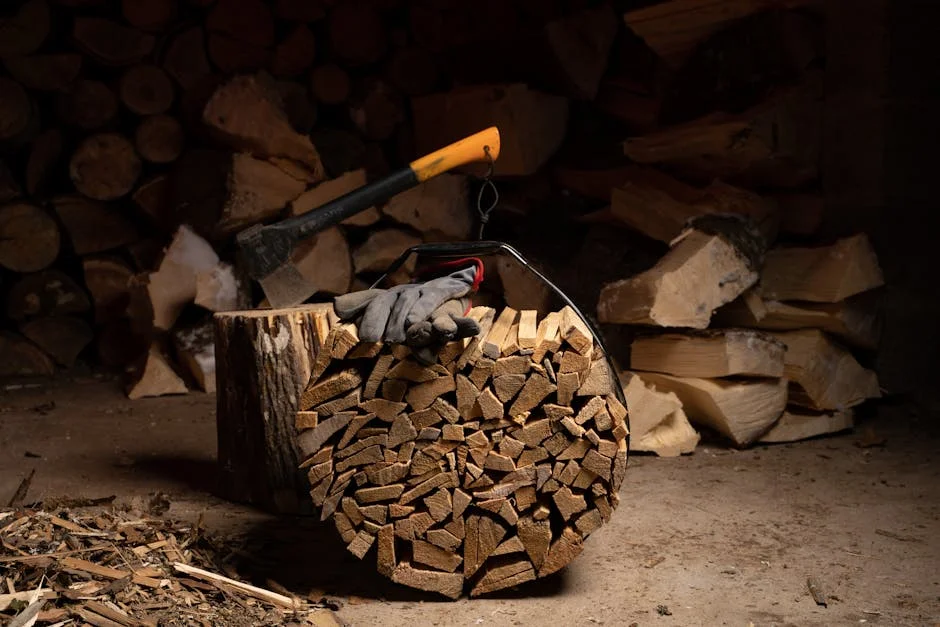
Best Wood Splitting Axes Reviewed: Find Your Perfect Fit

Affiliate disclosure: Some links on this page are affiliate links. If you buy through them we earn a small commission at no extra cost to you. This never influences which products we recommend — we only suggest things we'd buy ourselves. Product prices and availability are accurate as of the date published and are subject to change. Always check Amazon for current pricing before purchasing. Learn more.

Quick Picks
Fiskars X27 Super Splitting Axe, 36" Wood Splitting Axe for Medium to Large Size Logs with Shock-Absorbing Handle,
36-inch length provides extended reach for splitting logs
Buy on AmazonFiskars 8 lb. Splitting Maul - 36" Shock-Absorbing, Comfort Grip Handle - Rust Resistant Forged Steel Blade - Wood
8 lb weight provides substantial striking force for wood splitting
Buy on Amazon1844 Helko Werk Germany Traditional Saxon - Made in Germany Heavy Duty Splitting Axe for Chopping Firewood and
Traditional Saxon design indicates proven splitting axe geometry
Buy on Amazon| Product | Price Range | Top Strength | Key Weakness | Buy |
|---|---|---|---|---|
| Fiskars X27 Super Splitting Axe, 36" Wood Splitting Axe for Medium to Large Size Logs with Shock-Absorbing Handle, best overall | $$ | 36-inch length provides extended reach for splitting logs | Longer 36-inch length may be unwieldy for smaller users | Buy on Amazon |
| Fiskars 8 lb. Splitting Maul - 36" Shock-Absorbing, Comfort Grip Handle - Rust Resistant Forged Steel Blade - Wood also consider | $$ | 8 lb weight provides substantial striking force for wood splitting | Heavier maul requires more strength and stamina than lighter alternatives | Buy on Amazon |
| 1844 Helko Werk Germany Traditional Saxon - Made in Germany Heavy Duty Splitting Axe for Chopping Firewood and also consider | $$ | Traditional Saxon design indicates proven splitting axe geometry | Manual axe requires physical skill and effort to use effectively | Buy on Amazon |
| 35.5" Splitting Axe, Wood Splitting Axe for Medium to Large Size Logs, 1065 High Carbon Steel Chopping Axe with Hickory also consider | $$ | 1065 high carbon steel provides durability for splitting work | Manual splitting axe requires significant physical effort and technique | Buy on Amazon |
| Estwing 8 lb Wood Splitting Maul with 36-Inch Fiberglass Handle - Forged Head Hardened to 50–55 HRC, Heavy-Duty Log also consider | $$ | 8 lb forged head with 50-55 HRC hardening provides durability | Heavy 8 lb weight demands significant strength and stamina | Buy on Amazon |
Splitting firewood is honest work, and the axe you bring to it matters more than most gear choices in a camp kit. A poor fit — wrong weight, wrong geometry, wrong handle length — turns an hour of productive work into an hour of frustration and sore shoulders. I’ve run through a few axes over the years in the GW and Jefferson, and the differences between a tool built for splitting and one that just technically qualifies are not subtle. If you’re building out a wood-processing kit, the full range of axes worth knowing about is broader than most people expect.
The key variables are weight, head geometry, and handle material. A splitting axe is not a felling axe — the blade is designed to push wood fibers apart rather than sever them, and that distinction drives everything else about how the tool should be sized and swung.
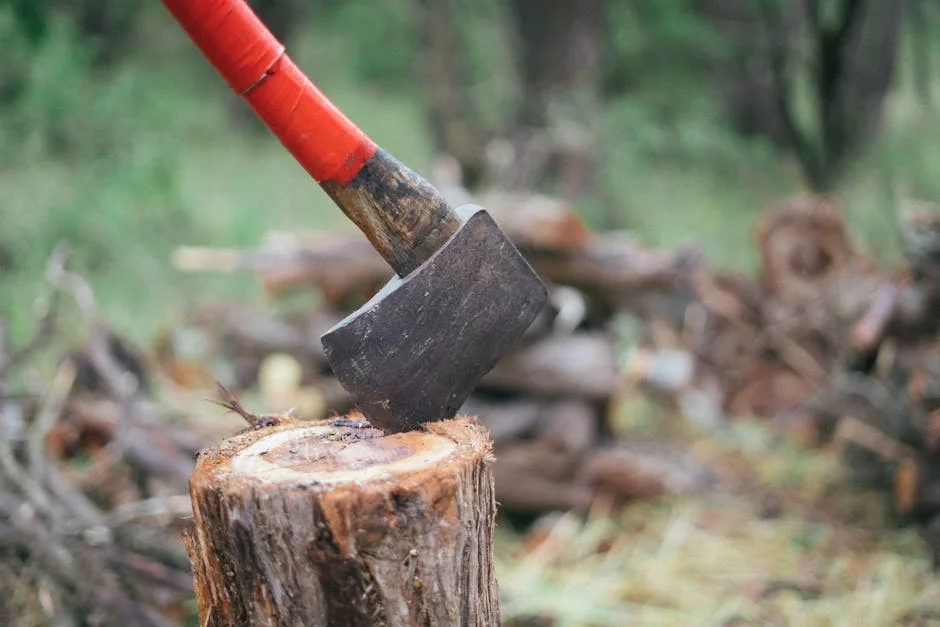
What to Look For in a Wood Splitting Axe
Head Weight and Striking Force
Head weight is the first number to look at. Lighter splitting axes — in the four-to-six-pound range — favor speed and are manageable for extended sessions. Heavier mauls, at eight pounds, deliver more force per swing but ask more of the person swinging them. The right choice depends on what you’re splitting and for how long.
For camp use, where you’re processing kindling and medium rounds, a lighter head is usually more practical. For serious firewood processing — full cord work, large-diameter rounds — more mass makes sense. Don’t assume heavier is better. A tired arm swings inaccurately, and inaccuracy with a splitting axe wastes effort and damages handles.
Head Geometry: Axe vs. Maul
A dedicated splitting axe has a convex, wedge-shaped head designed to drive through wood grain. A splitting maul is heavier, blunter, and built for rounds that resist splitting — dense hardwoods, knotty pieces, larger diameters. The geometry difference is real and meaningful.
Most camp and trail users are better served by a splitting axe than a full maul. The maul is a homestead tool, optimized for bulk processing at a fixed splitting block. For a camp kit or occasional firewood work, the splitting axe handles more situations without demanding as much from the user.
Handle Material and Length
Hickory has been the standard for axe handles for well over a century. It absorbs shock well, can be replaced in the field with the right tools and a blank, and telegraphs feedback through your hands that helps you adjust your swing. Fiberglass and composite handles eliminate one failure mode — cracking — but introduce others, and they can’t be replaced in the field.
Length matters for two reasons: leverage and swing mechanics. A 35-to-36-inch handle gives you a longer arc, which translates to more head speed at impact. That physics benefit is real. The trade-off is that a longer handle requires more controlled technique and more clearance around the splitting block.
Steel Quality and Heat Treatment
Not all axe steel is equal. Forged steel heads with documented hardness ratings — typically 50 to 55 HRC for splitting work — hold their edge longer and resist chipping better than cast or lower-grade alternatives. A head that’s too hard will be brittle. A head that’s too soft will deform at the edge.
When evaluating any splitting axe, look for forged construction and some specification of the steel grade or hardness. German and Scandinavian manufacturers have long track records with axe steel. Newer entrants to the market vary more widely, which makes the steel specification more important to verify.
Fit for Your Build and Use Case
A splitting axe that fits a six-foot user swinging full rounds all afternoon may be the wrong choice for someone processing smaller wood at a campsite. Handle length, head weight, and grip design all interact with your physical build and the work you’re actually doing.
Spend time with axes designed for different use cases before committing to a maul-weight tool you’ll only swing twenty times a day. The mid-weight splitting axe covers more ground for most bushcraft and camp uses than either the lightest hatchet or the heaviest maul. Know what you’re splitting, know how long you’ll be at it, and let those answers drive the weight decision.
Top Picks
Fiskars X27 Super Splitting Axe
The Fiskars X27 Super Splitting Axe is the most widely recommended splitting axe in this weight class, and the reasons are not complicated. The 36-inch composite handle puts real leverage behind every swing, and the blade geometry is purpose-built to split rather than chop — a distinction that matters after the first fifty swings. I’ve put time in with this tool on ridge camps in the GW, and it handles medium rounds efficiently enough that you’re not grinding through every piece.
The shock absorption built into the handle is not marketing language. On a full afternoon of splitting, the difference between a traditional handle and a well-designed composite shows up in your forearms and shoulders. Fiskars put real engineering into that handle, and it shows in extended use. The 36-inch length does ask for clean swing mechanics — if you’re newer to splitting axes, expect a short learning curve.
The X27 is the right starting point for most buyers in this category. It covers the range from medium camp rounds to larger pieces without demanding the strength and stamina of a full maul.
Check current price on Amazon.
Fiskars 8 lb. Splitting Maul
The Fiskars 8 lb. Splitting Maul is a different tool than the X27, and the distinction matters. Eight pounds is maul territory — this is not an all-day trail axe, it’s a fixed-station splitting tool for serious volume work. If you’re processing large-diameter hardwood rounds or working through knotty pieces that defeat lighter axes, the extra mass earns its keep.
The same handle engineering from the X27 carries over here. The shock absorption is arguably more important at this weight because each swing loads your joints harder. Fiskars got the geometry right on the head — the convex profile pushes fibers apart reliably rather than wedging and sticking.
I haven’t swung an eight-pound maul regularly enough to give you a long-term wear assessment, but the construction here is consistent with Fiskars’ track record. If your intended use is bulk firewood processing rather than camp kit, this is worth the step up in weight.
Check current price on Amazon.
1844 Helko Werk Germany Traditional Saxon
The 1844 Helko Werk Germany Traditional Saxon is the tool for buyers who want a hand-forged axe with documented German manufacturing behind it. Helko Werk has been making axes in the Westerwald region since 1844 — that’s not a heritage claim bolted onto a catalog import, it’s an actual production lineage with consistent steel standards.
The Traditional Saxon head geometry is a proven splitting profile, heavier and more convex than a felling axe, designed to drive through the grain of firewood rounds rather than bite into them. The craftsmanship shows in the fit of the head to the handle and in the grind of the edge. This is a tool built to be maintained and used for decades.
The trade-off is that you’re buying a single-purpose firewood-processing tool with a premium placed on the manufacturing origin and quality of materials. For buyers who value that lineage and plan to own the axe for twenty years rather than two, it’s a sound choice.
Check current price on Amazon.
35.5” Splitting Axe with Hickory Handle
The 35.5” Splitting Axe makes the case for traditional materials at a mid-range price point. The 1065 high-carbon steel head is a real specification — not a vague marketing claim — and 1065 is a workable grade for splitting work, with adequate toughness for the impact loads a splitting axe takes.
Hickory handles have been used on working axes for more than a century because they work. The wood absorbs shock well, and when the handle eventually fails — as they all do — a replacement blank and a wedge are all you need to put the axe back in service. That repairability has real value in a bushcraft kit.
At 35.5 inches, the length is competitive with the longer Fiskars options. The slightly shorter length may suit buyers of smaller stature better than a full 36-inch handle. This is a capable mid-range option for buyers who want traditional materials and a real steel specification without paying Helko prices.
Check current price on Amazon.
Estwing 8 lb Wood Splitting Maul
The Estwing 8 lb Wood Splitting Maul is Estwing entering the splitting maul category, which is notable because Estwing’s reputation is built on forged construction and documented hardness. The 50-to-55 HRC specification on the head puts this in the correct range for splitting work — hard enough to hold geometry under impact, not so hard it becomes brittle.
The 36-inch fiberglass handle is a design choice worth understanding. Fiberglass eliminates the cracking and swelling concerns of wood in wet conditions, but it changes the feel of the tool and cannot be replaced with field materials. For a fixed-station splitting setup, that trade-off is acceptable. For a camp kit where handle repair might be necessary in the field, it’s a different calculation.
Eight pounds is a serious commitment. Estwing built this tool for people who split large volumes of dense hardwood and want a forged American head doing the work. If that describes your use case, this is a well-engineered option from a manufacturer with a long track record.
Check current price on Amazon.

Buying Guide
Axe vs. Maul: Choosing the Right Category
The first decision is whether you need a splitting axe or a splitting maul. They are not interchangeable. A splitting axe, typically four to six pounds with a lighter, more tapered head, is faster to swing and better suited to camp use, moderate-diameter rounds, and extended sessions where fatigue accumulates. A maul, at seven to eight pounds with a heavier blunt profile, delivers more single-strike force and handles large-diameter or knotty rounds that would deflect a lighter axe.
Most bushcraft and camp users who are processing firewood for a fire — not filling a woodshed — are better served by a splitting axe. The maul-weight tools in this roundup are worth buying only if your actual use involves high-volume hardwood processing at a fixed location.
Handle Material: Wood vs. Composite
Hickory handles have a real argument behind them. They absorb shock effectively, they telegraph feedback through your hands, and they can be replaced in the field if they crack or break. A hickory handle blank and a wood wedge weigh almost nothing and can restore a broken axe to service without special tools. That matters on a long trip into the GW or Jefferson where you can’t run to a hardware store.
Composite and fiberglass handles solve the cracking problem and perform consistently in wet conditions. They’re appropriate for fixed-station tools at home or at a base camp. For a carried kit, the inability to field-replace a composite handle is a genuine limitation worth weighing.
Head Steel and Hardness
A forged head is better than a cast head for splitting work. The grain structure of a forged head is more consistent, and it holds its geometry under repeated impact better than cast alternatives. Look for a specified hardness — 50 to 55 HRC is the practical range for splitting axes. Harder than 55 and the steel becomes brittle under the lateral stresses of splitting; softer than 50 and the head deforms at the edge over time.
German manufacturers like Helko Werk and established American brands like Estwing document their steel and heat treatment. That transparency matters when you’re buying a tool meant to last decades.
Handle Length and Your Situation
Longer handles generate more head speed through a longer arc, which means more force at impact. The 35-to-36-inch handles in this roundup are designed for full-swing splitting from a standing position, with a fixed block. They are not camp-portability tools — they’re dedicated splitting implements.
If you’re evaluating a broader range of axes for different tasks, keep the intended use case clear. A 36-inch splitting axe is not a trail carry; it’s a base-camp or homestead tool. Shorter, lighter axes serve camp kit needs better. Match the tool to the actual task rather than buying the largest option available.
Maintenance and Long-Term Use
A splitting axe is a working tool, and working tools require maintenance. For wood-handled axes, keep the handle lightly oiled with linseed oil to prevent cracking and drying. Re-hang the head immediately if it loosens — a flying head is dangerous, not just inconvenient. Keep the edge geometry maintained, not razor-sharp the way a carving knife is, but free of rolled or chipped sections that would cause the head to stick rather than split.
For composite-handled tools, inspect the handle collar regularly for cracks where the handle meets the head. Most composite handles are not user-serviceable at the head-to-handle junction. If the collar cracks, the tool needs to be replaced rather than repaired. Factor that into a long-term ownership calculation.

Frequently Asked Questions
What is the difference between a splitting axe and a splitting maul?
A splitting axe is lighter — typically four to six pounds — with a more tapered head designed to be swung repeatedly over an extended session. A splitting maul is heavier, usually seven to eight pounds, with a blunter, more wedge-shaped head that delivers more force per swing for large-diameter or knotty rounds. For most camp and bushcraft uses, a splitting axe is the more practical choice. The maul is better suited to bulk firewood processing at a fixed location.
Is the Fiskars X27 better than the Helko Werk Traditional Saxon for general use?
For general camp use and occasional firewood processing, the Fiskars X27 Super Splitting Axe is easier to recommend — it’s broadly available, durable, and the handle engineering genuinely reduces fatigue. The 1844 Helko Werk Germany Traditional Saxon is the better tool if you value hand-forged German construction, plan to maintain it for decades, and want a wood handle you can re-hang in the field. Both split wood effectively; the difference is in ownership philosophy and long-term serviceability.
Should I choose a hickory handle or a composite handle?
Hickory handles absorb shock well, provide tactile feedback during swinging, and can be replaced in the field with a blank and a wedge. Composite handles resist cracking and moisture damage but cannot be field-replaced and change the feel of the tool. For a fixed-station splitting setup, composite is a reasonable choice. For a carried kit where handle repair might be necessary away from a hardware store, hickory is the more practical option.
How heavy a splitting axe should I buy?
Match the weight to your build and intended use. For camp firewood processing — moderate-diameter rounds, shorter sessions — a four-to-six-pound splitting axe is sufficient and much less fatiguing over time. If you’re processing large-diameter hardwood rounds in volume, a seven-to-eight-pound maul like the Estwing 8 lb Wood Splitting Maul or Fiskars 8 lb. Splitting Maul delivers more consistent results.
What hardness should a splitting axe head be?
The practical range for splitting axes is 50 to 55 HRC. A head harder than 55 HRC becomes brittle under the lateral stresses involved in splitting — it’s more prone to chipping than an edge-cutting tool would be. A head softer than 50 HRC deforms at the edge and loses its geometry under repeated impact. Look for documented hardness specifications when buying; manufacturers who publish this number typically stand behind their metallurgy.
Where to Buy
Fiskars X27 Super Splitting Axe, 36" Wood Splitting Axe for Medium to Large Size Logs with Shock-Absorbing Handle,See Fiskars X27 Super Splitting Axe, 36" … on Amazon